
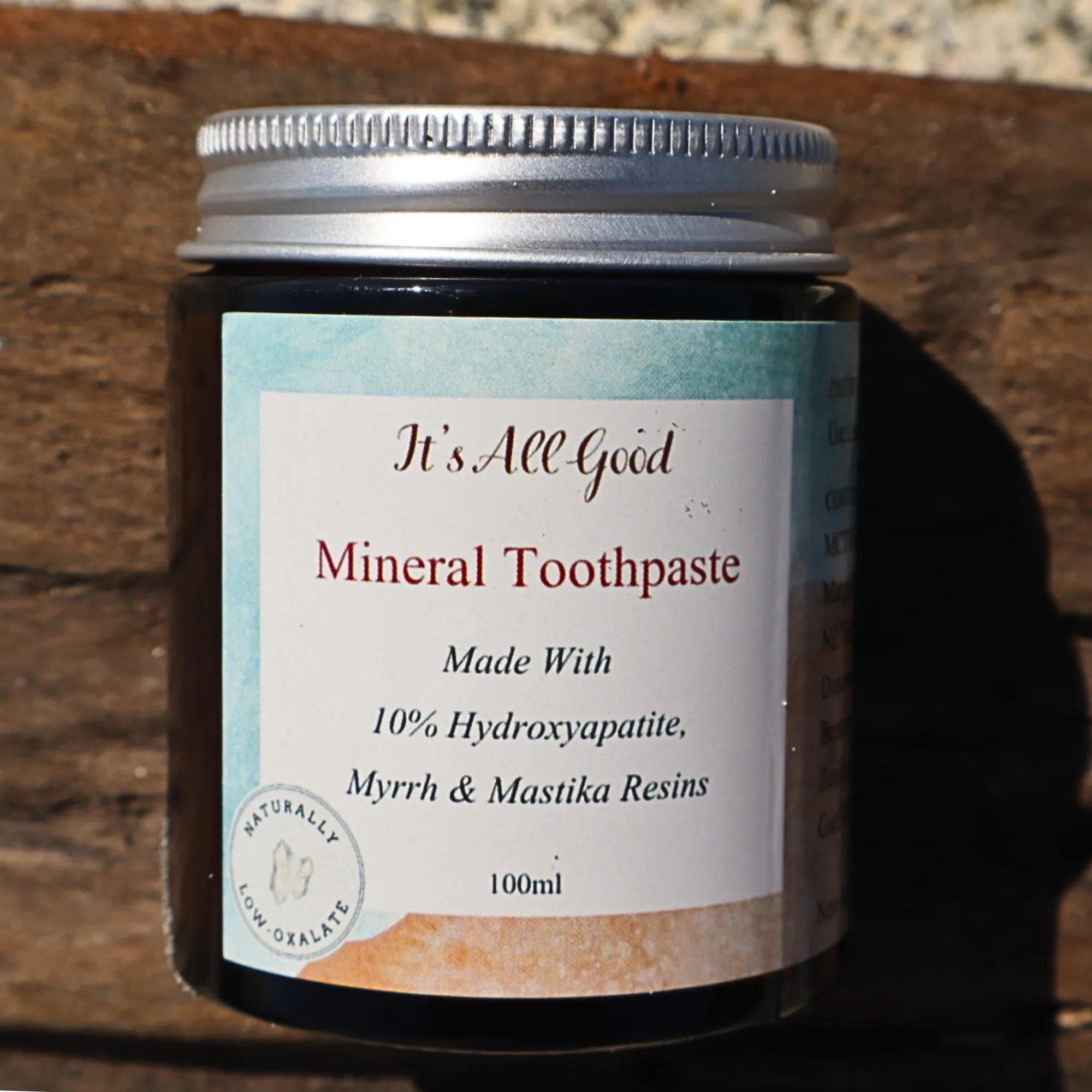
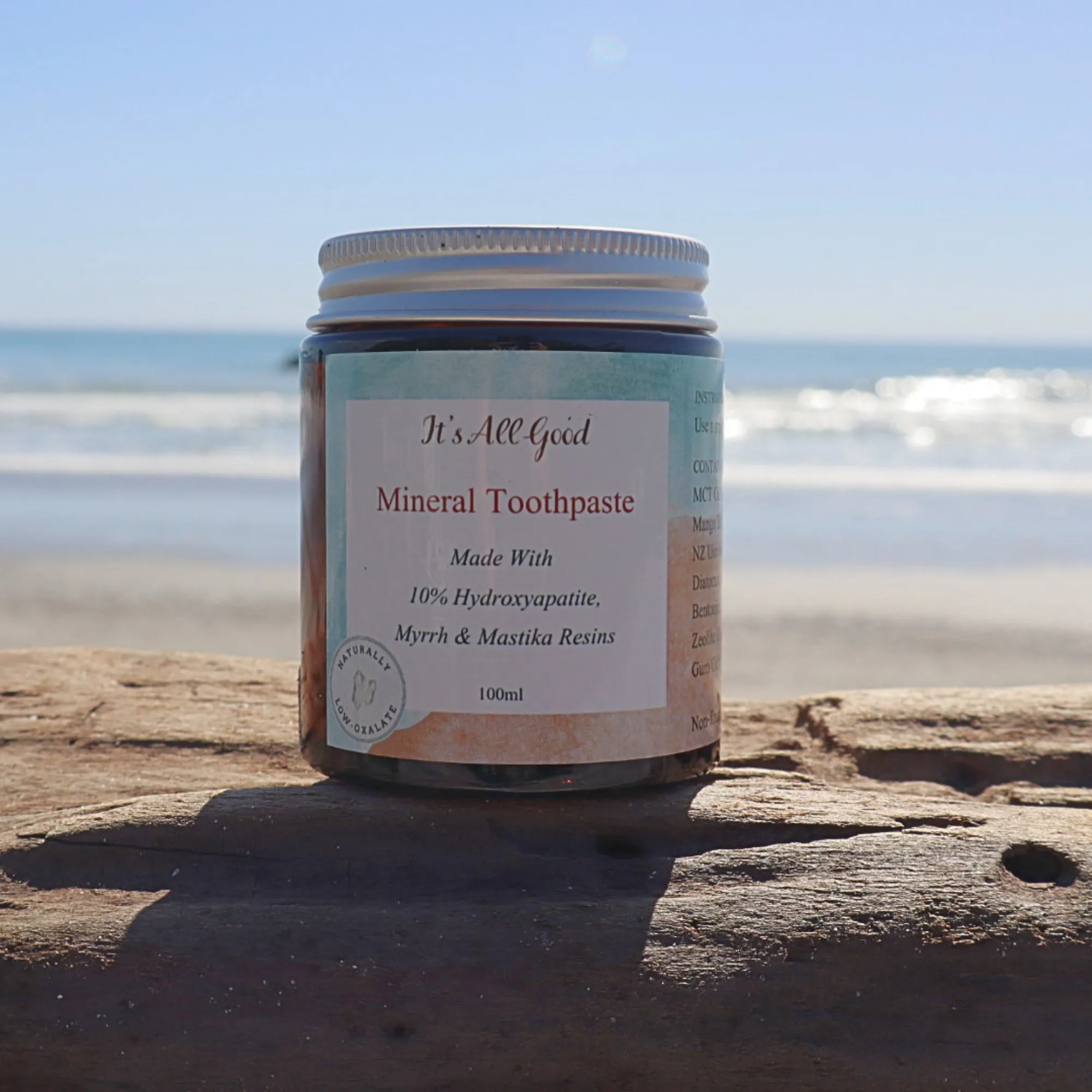
Mineral Toothpaste | Made With 10% Hydroxyapatite, Myrrh & Mastika Resins
Click to enlarge
Natural mineral toothpaste made with 10% hydroxyapatite, Myrrh and Mastika resins for gentle cleaning and healthy-feeling gums. Fluoride-free and low-oxalate.
Our Mineral Toothpaste, made with 10% Hydroxyapatite, Myrrh & Mastika Resins, starts with the same mineral base as our PURE toothpaste, then adds two resins people have used for mouth care for thousands of years: Mastika (also known as mastic) and Myrrh.
Hydroxyapatite (the natural mineral that makes up most of your tooth enamel) gently cleans and helps remineralise your teeth. Unrefined New Zealand sea salt and natural clays round out the formula, with no fluoride, SLS (a harsh foaming agent), foaming agents, colours, sweeteners or artificial flavours.
Good to know: Mastika and Myrrh naturally contain salicylates (plant compounds some people react to), so this toothpaste is not salicylate-free. If you need to avoid salicylates, choose our PURE Salicylate-Free Mineral Toothpaste. This one is still low-oxalate (low in oxalates, natural compounds some people limit in their diet).
Why you’ll love it
- 10% microcrystalline hydroxyapatite (non-nano) for gentle cleaning and remineralisation
- Made with Mastika and Myrrh, two resins with a long history in traditional mouth care
- Low-oxalate
- Free from fluoride, SLS, foaming agents, colours, sweeteners, artificial flavours, gluten and dairy
- Unrefined sea salt stimulates saliva, which helps cleanse the whole mouth
- Made in New Zealand and packed in a reusable amber glass jar
Who is it for?
- Adults who want a hydroxyapatite toothpaste with a traditional twist
- Anyone looking for fluoride-free, SLS-free oral care
- People who prefer natural ingredients with a long history of use in mouth care
Avoiding salicylates? Our PURE Mineral Toothpaste is the right one for you.
Key ingredients
Micro-Hydroxyapatite
A mineral that closely matches the natural mineral content of teeth, supporting gentle cleaning and remineralisation.
Mastika - Pistacia Lentiscus Gum Oil
Mastic is a resin from the Pistacia lentiscus tree, and the best-known mastic grows on the Greek island of Chios. It has been used in mouth care since ancient Greek and Roman times, and researchers have studied its effects on mouth bacteria and plaque.
Myrrh - Commiphora Myrrha Oil
Myrrh is a resin from the Commiphora myrrha tree, native to north-east Africa and the Arabian Peninsula. It was used in ancient Middle Eastern medicine for gum conditions and was a common ingredient in tooth powders and mouth tinctures (plant extracts in alcohol) in 19th-century Britain.
NZ Unrefined Sea Salt
Gives the toothpaste its salty taste and stimulates saliva production to help cleanse the whole mouth.
Bentonite Clay & Zeolite
Natural clays and minerals that support oral detoxification and can be used for oil pulling (swishing oil in your mouth).
Full ingredient list
Caprylic/Capric Triglyceride, Sodium Bicarbonate, Mangifera Indica (Mango) Seed Butter, Maris Sal (Sea Salt)*, Hydroxyapatite, Solum Diatomeae (Diatomaceous Earth), Bentonite, Zeolites, Theobroma Cacao (Cocoa) Seed Butter, Calcium Carbonate, Pistacia Lentiscus Gum Oil, Commiphora Myrrha Oil*.
*Organic.
Traditional use of Mastika and Myrrh
Mastika
- Greek physician Dioscorides (1st century AD) described mastic as an aromatic cleaning agent for the mouth
- Romans favoured mastic-wood toothpicks
- Medieval Jewish records from Cairo list lentisk resin (another name for mastic) for cleaning the mouth
- Jewish law allows chewing mastic on the Sabbath to remove bad breath
- Erasmus wrote of a tooth powder made from mastic wood
Myrrh
- Used in ancient Middle Eastern medicine for gum conditions
- 19th-century British and American pharmacopoeias (official medicine books) listed tincture of myrrh as a mouthwash for spongy gums (an old term for soft, swollen gums) and mouth ulcers
- A common ingredient in tooth powders
- Chemists sold myrrh and borax tincture to strengthen the gums and freshen the breath
• • European herbal regulators still recognise myrrh tincture for minor mouth ulcers, based on long traditional use
Why we chose these ingredients
We started with the mineral base our customers already love, then added two resins with a long history in mouth care. Hydroxyapatite gently cleans and helps remineralise (put minerals back into) your teeth, and the clays and sea salt support the whole mouth. Mastika has been used in mouth care since ancient Greek and Roman times, and Myrrh was a common ingredient in tooth powders and mouthwashes in 19th-century Britain and America. Every ingredient is there for a reason, and nothing synthetic is added.
Texture & feel
A rich, mineral-based paste with a naturally salty taste from the unrefined sea salt and a delicate herbal flavour from the Myrrh and Mastika resins. It is firmer when cool and softer in warmer weather.
How to use
Use a small amount and brush for 2 minutes. Rinse well.
You can also use this toothpaste for oil pulling, which allows the clays to help draw out toxins such as heavy metals.
Read more about mineral toothpaste here: Do we really need to brush our teeth?
Frequently Asked Questions
Is this toothpaste salicylate-free?
No. Mastika and Myrrh naturally contain salicylates, so this toothpaste is not salicylate-free. If you need to avoid salicylates, please choose our PURE Mineral Toothpaste instead.
What is the difference between this and the PURE Mineral Toothpaste?
Both use the same mineral base with 10% hydroxyapatite and no fluoride. This one adds Mastika and Myrrh and is not salicylate-free. The PURE toothpaste is naturally salicylate-free and low-oxalate.
What are Mastika and Myrrh, and why are they in a toothpaste?
They are natural resins from trees. Mastika (mastic) has been used in mouth care since ancient Greek and Roman times, and Myrrh was used in ancient Middle Eastern medicine for gum conditions and was a common tooth powder ingredient in 19th-century Britain and America. We have added both to our mineral base.
How long have Mastika and Myrrh been used in mouth care?
Written records go back about 2,000 years. Dioscorides described mastic as an aromatic cleaning agent for the mouth in the 1st century AD, and Romans used mastic-wood toothpicks. Myrrh was used in ancient Middle Eastern medicine for gum conditions, and 19th-century pharmacopoeias listed it as a mouthwash.
Is it fluoride-free?
Yes. It contains no fluoride, SLS, foaming agents, artificial colours, sweeteners or flavours.
Why does it taste salty?
The salty taste comes from unrefined New Zealand sea salt, which stimulates saliva production and helps cleanse the whole mouth.
Is it suitable for children?
This toothpaste is formulated for adults. If you are buying for a child, our PURE Mineral Toothpaste is the one we recommend for the whole family.
Packed in a recyclable and reusable amber glass jar with a metal lid
Available size - 100ml
Shelf life - 3 years
Store in a cool, dark place away from direct sunlight to maximise shelf life
Disclaimer
Our products are generally suitable for most individuals. If you experience any allergies, irritation, or sensitivity, discontinue use immediately.
This product has no added synthetic ingredients, artificial fragrances or preservatives.
This product is not intended to diagnose, cure, treat, or prevent any disease.
Ready to try a mineral toothpaste with a traditional twist? Add Mineral Toothpaste with Myrrh & Mastika Resins to your cart today.